
September 1, 2025
A warm pool expands your swim season and makes the water easier to manage. In Tauranga's sunny, coastal climate, the two practical ways to heat a pool are solar and electric heat pumps. Here's a straight, homeowner-friendly guide to choosing, sizing, and running either system - and how Crystal Clear Pool Services sets it up so it just works.
Start with the basics: heat loss and covers
Most pool heat is lost through evaporation, not through the walls. That's why the cheapest "heater" you'll ever buy is a good cover. With a cover on, you need a smaller system, you'll reach temperature faster, and your running costs drop. In short: plan the cover and the heater as one system.
Solar pool heating - low running cost, weather dependent
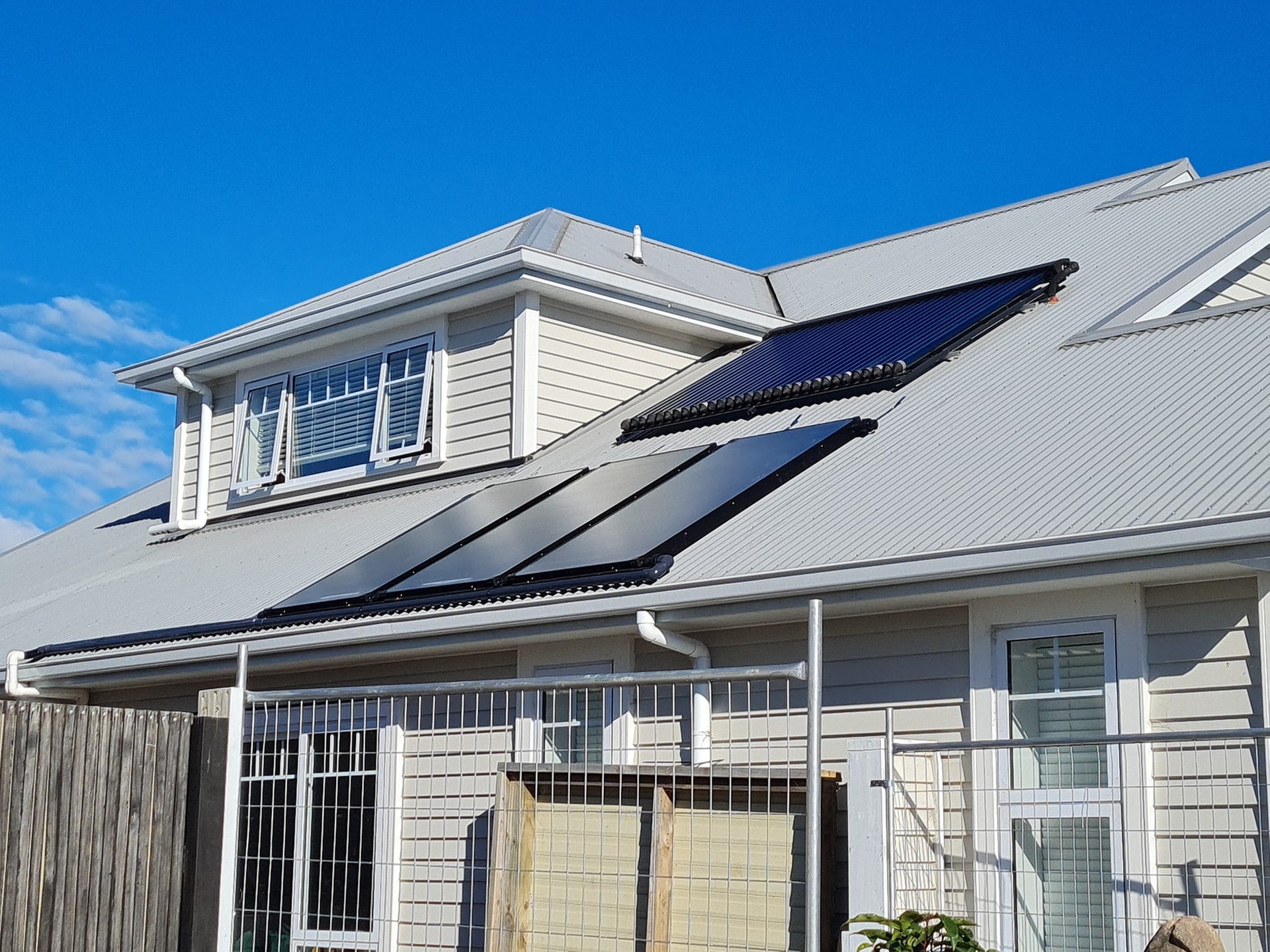
How it works: Roof-mounted or rack-mounted collectors circulate pool water through black mat or rigid panels. The sun adds heat; the pump returns warmed water to the pool.
Best for: Owners who swim mainly in the warmer months, have usable roof area, and want the lowest ongoing cost.
Pros
- Very low running cost once installed
- Quiet, simple, long service life (few moving parts)
- Great match for Tauranga's high sunshine hours
Trade-offs
- Output follows the weather and season
- Needs adequate, unshaded roof space facing north to west
- Slower to recover temperature after a cold snap
What we focus on
- Collector orientation/tilt and hydraulic balance
- Panel-to-pool area ratio suitable for your site and swim goals
- Integration with your filtration pump and automation so solar only runs when there's heat to harvest
Heat pump pool heating - precise temperature, longer season
How it works: A purpose-built pool heat pump moves heat from the air into the water (like a reverse-cycle AC for pools). Modern units have high COPs (efficiency) in mild climates and deliver steady temperatures.
Best for: Year-round or shoulder-season swimming, tight roof space, precise temperature control.
Pros
- Set-and-forget temperature control (e.g., 26 - 28 °C)
- Reliable in shoulder seasons and cool mornings
- Smaller footprint than solar; flexible placement
Trade-offs
- Higher running cost than solar (still efficient vs. alternatives)
- Needs a dedicated power supply and clear airflow
- A light fan noise to consider in placement
What we focus on
- Correct sizing for pool volume, wind exposure, and desired season
- Electrical load and circuit requirements
- Airflow, condensate management, and noise-aware siting
- Smart controls and timers so you heat when it's cheapest/most efficient
Real-world context: When facilities switch from combustion heating to heat pumps, the savings can be material - for example, Huntly Aquatic Centre reported large monthly savings after moving to heat pumps for pool heating. EECA case study.
Hybrid approach - best of both
In Tauranga, a solar-first, heat-pump-assist setup often makes sense: solar carries the daytime load; a (smaller) heat pump tops up after cloudy spells or for early/late-season swimming. This reduces running costs while keeping your dates and temperatures predictable.
Running cost levers you control
- Use the cover whenever the pool's not in use.
- Target temperature, not "max". Each extra degree costs more.
- Schedule intelligently: Heat during the warmest part of the day; run filtration to suit heating times.
- Keep hydraulics clean: A clean filter and basket mean better flow and faster heating.
What Crystal Clear handles end-to-end
- Site assessment (sun, wind, access, services) and honest sizing
- Clear line-item quoting for equipment, power, plumbing, and controls
- Supply and install of solar collectors or heat pump (and cover systems)
- Integration with existing filtration, chlorination, and automation
- Commissioning with performance checks and a simple owner handover
- Ongoing valet service to log temperatures, verify efficiency, and keep everything tuned
The bottom line
If you want lowest running cost and mostly warm-weather swimming, go solar. If your priority is predictable temperature and extended season, go heat pump. If you want both, go hybrid. We'll size it properly, integrate it neatly, and keep it maintained so you get warm, clear water without fuss.
Thinking about heating your pool in Tauranga? Get in touch - we'll recommend the simplest setup that meets your temperature and season goals.
Posted in Blog
Enquiries
Contact us
Give Us a Call On
027 288 2711or leave a message using the form below
- Tauranga, Bay of Plenty
- Mon-Fri: 8am - 5pm
- jonas.crystalclearpool@gmail.com